When V. Srinivas stepped into the Secretariat this spring, the change wasn’t ceremonial—it was surgical. A 1989-batch IAS officer nearing the close of a long administrative arc, he arrived not to maintain continuity, but to disrupt it. In a state where governance has often moved at the pace of its deserts, Srinivas is attempting something audacious: compressing time itself.
The early signals are unmistakable. Files no longer drift. They move, they ping, they demand attention. Inside the Secretariat, a quiet but consequential shift is underway—a transition from paperwork to pulse, from hierarchy to dashboards. Under the banner of Viksit Rajasthan-2047, governance is being reimagined not as a chain of approvals, but as a live system—responsive, measurable, and increasingly predictive.
At the core of this transformation is a doctrine officials have begun to repeat with near-ritual precision: Zero Delay. It’s not just a slogan; it’s an operating system. AI-enabled dashboards now trace the lifecycle of decisions in real time, flagging inertia before it metastasizes into delay. Bureaucracy, once reactive, is being rewired to anticipate.
But systems alone don’t shift states-people do
The April 2026 reshuffle revealed the architecture behind Srinivas’s intent. At the nerve center, the Chief Minister’s Office has been quietly reinforced. Jitendra Kumar Soni, known for blending administrative rigor with technological fluency, now operates as the connective tissue between policy and perception. His role is less about announcements and more about absorption-ensuring that digital grievance systems, e-health platforms, and citizen interfaces don’t just exist, but embed themselves into daily life.
Out in the districts, the strategy becomes more kinetic
Tina Dabi’s move to Tonk is more than a routine transfer-it’s a redeployment of problem-solving capital. Having built a reputation tackling scarcity and rural friction in Barmer, she now steps into a district where infrastructure meets inertia. The expectation is clear: unlock, accelerate, deliver-particularly in bridging last-mile gaps in roads, health access, and skilling ecosystems.
Meanwhile, Gaurav Agrawal takes charge in Udaipur, where governance must balance tourism, ecology, and urban pressure. Here, digitization is not cosmetic—it’s structural. Land records, permits, taxation-systems that once operated in silos are being drawn into a single digital bloodstream, enabling faster clearances and more transparent urban management.
And then there is water-Rajasthan’s oldest constraint, now its most data-driven frontier.
With Rajan Vishal steering the Jal Jeevan Mission, water governance is being recast as a real-time discipline. Pipelines are tracked like supply chains, progress mapped through geospatial intelligence, delays flagged instantly. In a state defined by scarcity, precision has become policy.
Citizen at the Center: Governance Meets the Ground
If Zero Delay is the system, citizen centricity is its purpose.
Srinivas’s approach is not confined to dashboards-it is visibly grounded in field immersion. From visits to Ayushman Arogya Kendra and tertiary care hospitals to direct interactions with citizens during Pink City conservation efforts in Jaipur, governance is being recalibrated through lived feedback, not just file inputs. Institutional touchpoints are being activated as listening posts: Police Stations, Industrial Training Institutes, revenue courts, and Jan Sampark Kendra are no longer passive nodes- they are active interfaces of accountability. Meanwhile, platforms like Vidya Samiksha Kendra and PM Shri Schools are strengthening the education backbone through real-time monitoring and outcome tracking. This is governance not as abstraction, but as presence-a Rajasthani working amongst Rajasthanis, collapsing the distance between state and citizen.
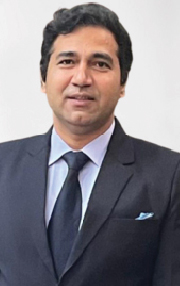 Dr. Jitendra Kumar Soni
A tech-savvy 2010-batch IAS officer, Dr. Soni serves as Secretary to the Chief Minister. He oversees digital governance and public outreach, holding additional charge of the Information & Public Relations (I&PR) Department to ensure seamless policy communication and technological absorption.
 Riya Dabi
A 2021-batch officer known for her administrative focus, Riya Dabi now serves as Officer on Special Duty (OSD) in the Chief Minister’s Office. She transitioned from regional administrative roles to the state’s central policy hub to assist in high-level executive coordination.
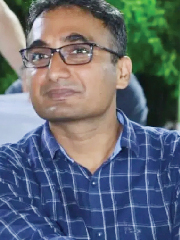 Gaurav Agrawal
A 2014-batch IAS topper and IIT Kanpur alumnus, Agrawal is the District Collector of Udaipur. He focuses on structural digitization, integrating land records and urban systems into a unified framework to manage the city’s complex tourism and ecological needs.
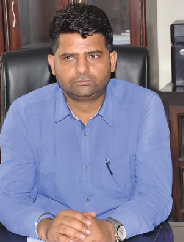 Rajan Vishal
A 2008-batch officer, Vishal leads the Jal Jeevan Mission as its Mission Director. He has transformed water governance into a data-driven discipline, using geospatial intelligence and real-time tracking to ensure precision and accountability in Rajasthan’s water infrastructure.