

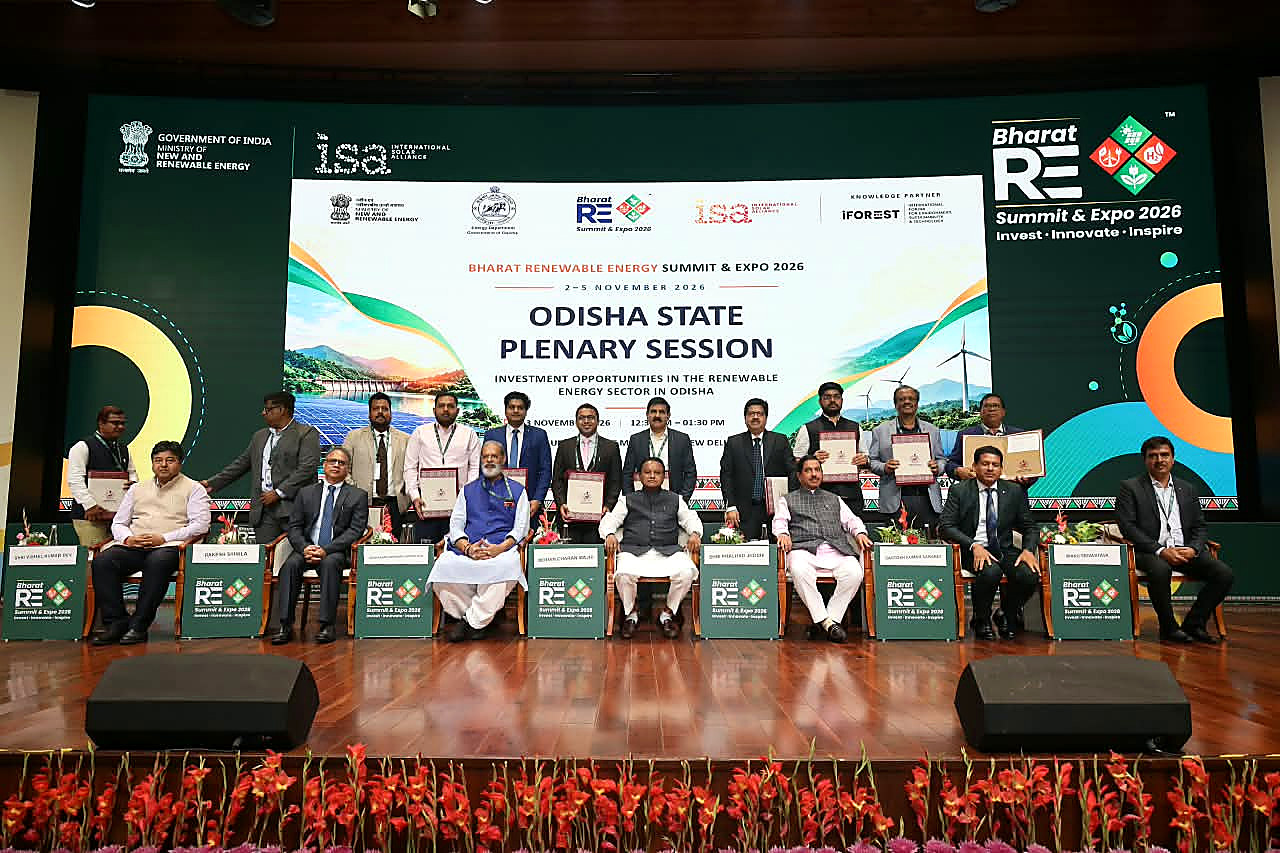
The proposals span pumped storage, solar and wind power, hybrid renewable energy, battery storage, green hydrogen, green data centres and other emerging technologies. The agreements were announced at the Bharat Renewable Energy Summit and Expo 2026 at Bharat Mandapam in New Delhi today.
Chief Minister Mohan Charan Majhi said Odisha aims to source 74% of its installed power capacity from non-fossil fuel sources by 2047 and become one of India’s top five power-exporting states. He invited investors to set up clean energy projects, citing policy stability, time-bound approvals and planned expansion of power infrastructure.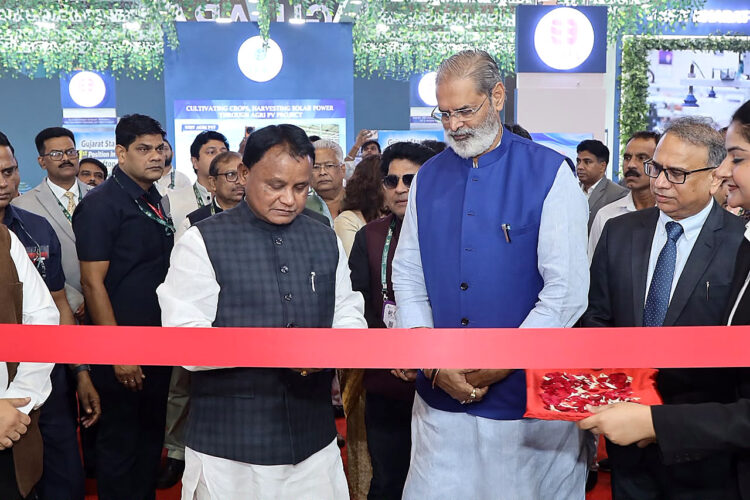
The state has sanctioned ₹15,948 crore under the Mukhya Mantri Shakti Bikash Yojana to modernise and expand its power transmission network, according to the government. It said strengthening transmission infrastructure ahead of new generation capacity was among its priorities for attracting investment.
Union Minister for New and Renewable Energy Pralhad Joshi highlighted Odisha’s natural resources, industrial base and port infrastructure as advantages for clean energy investment. He cited opportunities in renewable power, energy storage, floating solar, wind power, green hydrogen and green ammonia.
The Odisha State Plenary on investment opportunities in renewable energy drew more than 900 delegates, the government said. The event was attended by Majhi, Deputy Chief Minister Kanak Vardhan Singh Deo and senior central and state government officials.
Mr Singh Deo said Odisha had met peak electricity demand of about 6,242 MW during the summer without scheduled load shedding. He also highlighted the state’s potential in pumped storage, floating solar and wind energy, along with plans to develop green hydrogen and ammonia hubs at Gopalpur and Paradip.
Odisha has set a target of 10.96 gigawatts of renewable energy capacity by 2030 under its Renewable Energy Policy, 2022. Its installed renewable energy capacity stood at 3,641.23 MW as of September 30, 2026.
The proposed investments mark a step in Odisha’s efforts to expand clean energy generation, attract industrial investment and strengthen its role in India’s energy transition. The proposals represent prospective investments and planned capacity additions, rather than completed projects or operational generating capacity.