

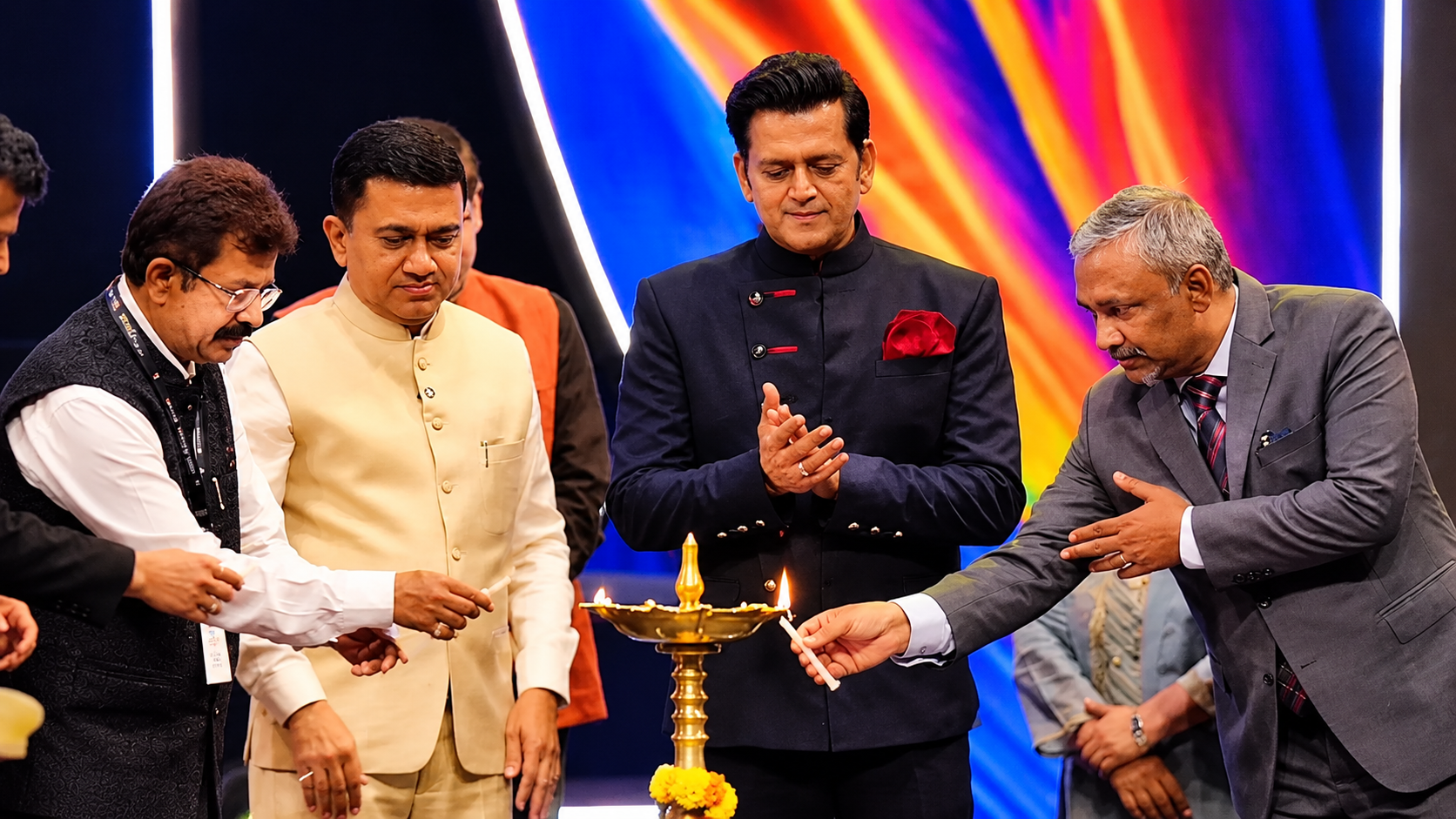
 PANAJI, GOA: Cinema may entertain millions, but its influence extends far beyond the silver screen. It shapes national identities, builds international relationships, creates employment and increasingly drives a new generation of technology-led businesses. At the 57th International Film Festival of India (IFFI), being held in Panaji from November 20 to 28 under the theme Stories Without Borders, India is seeking to bring these dimensions together.
What is unfolding in Goa is more than another celebration of cinema. It reflects a larger ambition to leverage India’s cultural diversity, institutional infrastructure, technological capabilities and creative talent to establish the country as a serious player in the global creative economy. For a nation with one of the world’s largest film industries and an extraordinary range of storytelling traditions, the opportunity is enormous. The challenge, however, is to translate creative excellence into sustainable businesses, international market access, intellectual property ownership and globally competitive enterprises.
IFFI 2026, alongside the 20th edition of WAVES Film Bazaar, offers a glimpse into how that transformation could take shape.
Cinema as an instrument of cultural diplomacy
In an increasingly interconnected world, storytelling has become an important instrument of cultural diplomacy. Films can introduce countries, societies and traditions to international audiences in ways that conventional diplomatic engagement often cannot. IFFI 57 reflects this ambition through its international participation and diverse programming.
Selected from more than 1,900 submissions across 137 countries, the festival brings together over 260 films, including more than 150 international titles from 86 nations. The opening film, Paweł Pawlikowski’s Fatherland, and closing film, Anthony Chen’s We Are All Strangers, underline its international character. Spain has been designated the Country of Honour and Russia the Partner Country, while dedicated BRICS cinema showcases and a centenary tribute to Polish filmmaker Andrzej Wajda add further dimensions to the programme.
These collaborations are significant beyond their ceremonial value. They create opportunities for filmmakers, producers, distributors and policymakers to establish relationships that can eventually translate into co-productions, investments and wider cultural exchanges.
The Indian Panorama 2026 provides another important dimension. Curated from a record 1,120 entries across 18 languages, it reflects the breadth of India’s filmmaking ecosystem, with more than 50 films directed by women and over 60 films by debut filmmakers. Dedicated sections for animation and films about films further expand the festival’s scope. Accessibility also receives attention, with eight screenings equipped with audio description and closed captioning.
The larger message is clear: India’s cultural influence will depend not simply on the scale of its film industry, but on how effectively it showcases the diversity of voices within it.
WAVES Film Bazaar: Turning creative ambition into business opportunities
Recognition at an international film festival is only the beginning. Ensuring that filmmakers can access global markets, secure financing, protect their intellectual property and generate commercial returns is an entirely different challenge. This is where WAVES Film Bazaar assumes importance.
Celebrating its 20th anniversary, the marketplace has expanded from 204 delegates in 2007 to more than 2,500 professionals representing over 40 countries. Its Co-Production Markets, Screenwriters’ Labs and Viewing Rooms connect creative projects with producers, investors, distributors and international industry stakeholders.
The evolution of Film Bazaar also reflects a broader shift in India’s approach to the audiovisual sector. The ambition is no longer restricted to offering cost-effective production facilities to international filmmakers. India increasingly wants to develop, own, finance and distribute original intellectual property.
This requires stronger bilateral and multilateral co-production frameworks, greater domestic and international investment in original Indian content, and improved business capabilities among creators. Rights management, international sales and regional streaming distribution are becoming essential skills for filmmakers and independent production houses seeking to compete in global markets.
These are not merely industry concerns. They call for a supportive policy environment, predictable regulatory frameworks and institutions capable of connecting creators with markets. The next World Audio Visual and Entertainment Summit (WAVES), scheduled for October 2027, offers an opportunity to build on these developments and strengthen the vision of a year-round marketplace for India’s creative enterprises.
Building talent and preparing for the next wave of technology
India’s creative economy cannot become globally competitive if opportunities remain concentrated in a handful of established production centres. The country’s strength lies in its regional storytelling traditions, emerging filmmakers and enormous pool of young talent. The challenge is to provide them with professional training, mentorship, access to technology and meaningful entry points into the industry.
IFFI 57’s Creative Minds of Tomorrow initiative addresses part of this challenge by bringing together 100 young practitioners across 13 filmmaking disciplines. Many participants come from outside traditional filmmaking hubs and receive opportunities for hands-on mentorship and industry exposure. Institutional capacity-building is equally important. The Indian Institute of Creative Technologies is working to strengthen India’s capabilities in animation, visual effects (VFX), gaming and extended reality (XR).
These sectors represent a rapidly expanding intersection of entertainment, technology and digital business. For policymakers, the priority should be to develop a wider creative skills ecosystem connecting educational institutions, industry, technology companies and regional talent pools. The objective must go beyond training people to enter the film industry; it should prepare a workforce capable of creating, managing and commercialising content across multiple digital platforms and emerging media formats.
Artificial intelligence is adding another dimension to this transformation. From virtual production and digital environments to automated workflows and advanced visual effects, AI has the potential to reduce production costs and make sophisticated filmmaking tools accessible to smaller creators. At IFFI 57, initiatives such as the CinemAI Hackathon reflect the growing importance of these technologies.
For independent filmmakers and resource-constrained production houses, AI could reduce barriers to entry, accelerate experimentation and open new avenues for storytelling. But technological advancement also raises difficult questions about consent, authorship, attribution, ownership and intellectual property protection. Who owns an AI-generated performance? Can a filmmaker use an actor’s digital likeness without explicit permission? How should original creators be compensated when their work contributes to AI-generated content?
These questions are becoming central to the future of the global audiovisual industry. India’s policy response will need to balance innovation with accountability. Clearer safeguards around consent, fair attribution, digital likeness and intellectual property rights will be essential to building confidence among creators, investors and technology companies. The objective should not be to restrict technological experimentation, but to ensure that innovation does not come at the expense of creative rights.
The governance imperative: Building an ecosystem, not just a festival
The larger significance of IFFI 57 lies in the convergence of several policy priorities: cultural diplomacy, international partnerships, market development, talent creation and responsible technology adoption.
The festival’s organisation through coordinated efforts involving the Ministry of Information and Broadcasting, the National Film Development Corporation (NFDC), the Government of Goa and the Entertainment Society of Goa demonstrates the importance of institutional collaboration. But the real test of such initiatives will be their long-term impact.
Can international conversations at IFFI translate into actual co-production agreements? Can Film Bazaar help independent Indian filmmakers secure financing and international distribution? Can regional talent access professional opportunities without having to migrate to established production centres? Can India create a credible framework for protecting creative ownership in the age of AI?
These are the questions that will determine whether India’s creative economy can move from potential to measurable economic outcomes. The country needs a more integrated approach in which film festivals, industry marketplaces, educational institutions, technology centres and government policies reinforce one another. It also needs stronger mechanisms to measure the outcomes of public investment in the creative industries, including employment generation, international partnerships, export opportunities and the commercial success of original Indian intellectual property.
Beyond the festival: India’s global creative ambition
IFFI 2026 presents an opportunity to look at cinema through a much wider policy lens. Its significance extends beyond the films being screened or the personalities walking the red carpet. The real opportunity lies in building an ecosystem where a young filmmaker from a small town can access world-class training, find an international co-production partner, secure investment, protect creative rights and reach audiences across borders.
India already possesses the cultural diversity, storytelling traditions, technological talent and market scale to make a substantial global impact. What it needs now is sustained institutional support, effective market linkages and a forward-looking governance framework.
The red carpet may capture the spotlight in Goa. But India’s real creative economy story will be written in the institutions, businesses and opportunities that continue to grow long after the festival closes.
The next big Indian export may not simply be a film. It could be an entire creative ecosystem.