By Special Correspondent
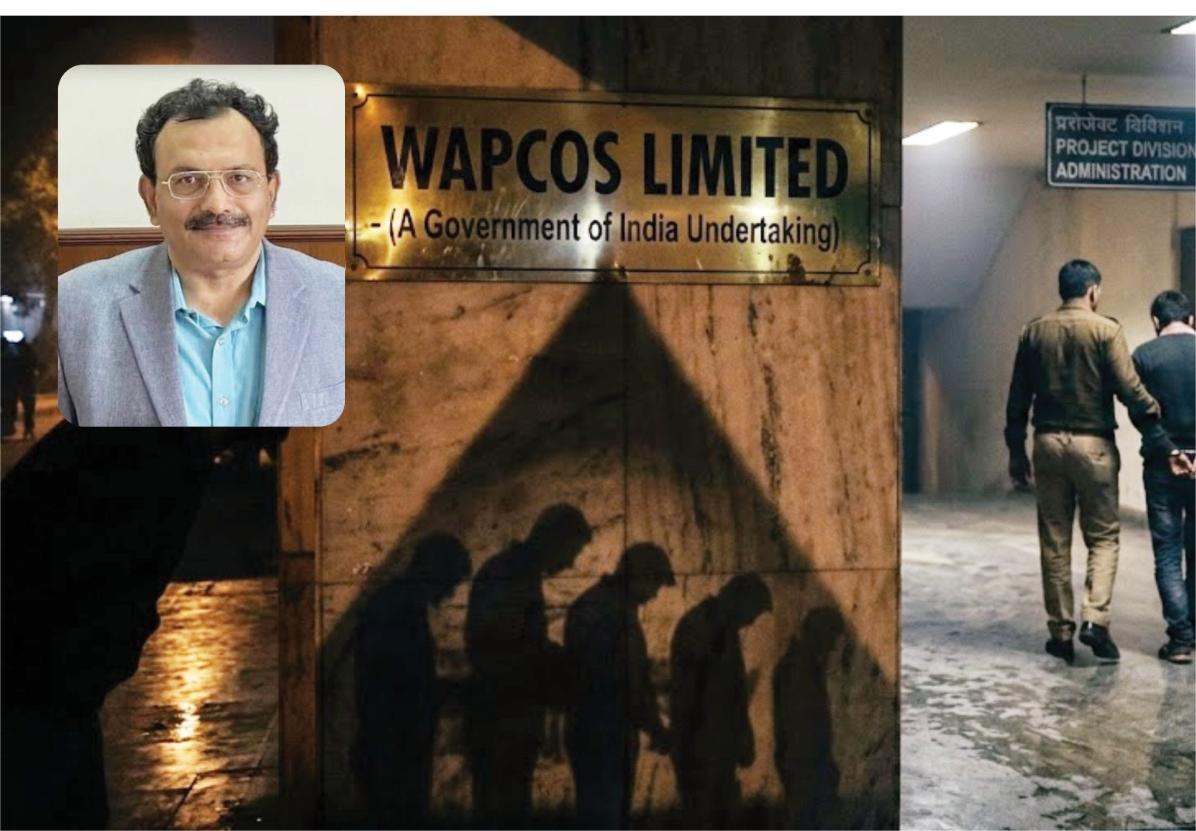
NEW DELHI — The arrest of a project manager at WAPCOS Limited in a bribery trap has triggered a widening federal investigation that officials say could expose deeper structural lapses inside the public sector engineering consultancy. The Central Bureau of Investigation (CBI) detained Project Manager Pankaj Dubey while he was allegedly accepting ₹10 lakh in illegal gratification, described by investigators as part payment in a larger transaction linked to project clearances. Officials familiar with the probe said the payment was “not an isolated instance,” though the agency has not publicly detailed the full amount allegedly demanded.
WAPCOS, a government-owned consultancy under the Ministry of Jal Shakti, handles domestic and overseas infrastructure assignments spanning water supply, river development and engineering works. Following the trap operation, the CBI conducted coordinated searches at multiple locations, including Lucknow, Deoria, Ghazipur and Bhubaneswar, recovering documents, digital devices and cash suspected to be linked to the alleged bribery arrangement. While no further arrests have been formally announced, officials indicated the probe is expanding to determine whether the alleged payment formed part of a broader pattern tied to tender approvals and project certifications.
The case has also drawn attention to WAPCOS’ internal decision-making structure. Industry executives and former consultants say that major tender approvals and payment clearances typically require multilayered authorization at headquarters. Some contractors have alleged that recent administrative restructuring centralized oversight of construction and consultancy contracts at the New Delhi headquarters, reducing field-level discretion — an assertion the PSU has not publicly responded to.
The unfolding case has raised questions about the role of internal vigilance mechanisms within the PSU. Critics argue that large consultancies handling high-value public works require continuous internal audits and independent compliance checks. The company’s vigilance division has not issued a public statement regarding whether internal reviews were underway prior to the CBI action. Governance analysts note that federal intervention in PSUs often exposes weaknesses in internal reporting systems, particularly where internal escalation protocols fail to trigger preventive scrutiny.
According to officials familiar with the probe, investigators are reviewing documentation linked to water infrastructure assignments under the Jal Jeevan Mission in parts of Uttar Pradesh and Odisha, along with select overseas consultancy contracts and river development works associated with Namami Gange Programme. Authorities have not indicated whether any specific project has been found non-compliant but confirmed that financial approvals and monitoring reports are under scrutiny.
Legal experts say the case is likely to proceed under provisions of the Prevention of Corruption Act, along with sections of the Bharatiya Nyaya Sanhita related to criminal conspiracy and cheating. Investigators are examining digital communications and financial transactions to trace the alleged flow of funds, with forensic analysis of seized electronic devices currently underway.
WAPCOS has played a key role in India’s domestic and international infrastructure diplomacy, particularly in water and sanitation projects. Any sustained legal action against senior officials could carry implications for ongoing assignments and contractor ecosystems linked to bid qualifications and project certifications. For now, the arrest of a field-level manager marks the visible start of what could become a larger institutional reckoning, as investigators work to determine whether the case reflects an isolated act of misconduct or signals deeper vulnerabilities within one of India’s prominent engineering consultancies.