On a hot afternoon in a remote block of Bihar, a field officer lifts her phone, clicks a photograph of a half-built water tank, tags its location, adds a short note—“construction stalled for 12 days due to supply delay”—and presses submit.
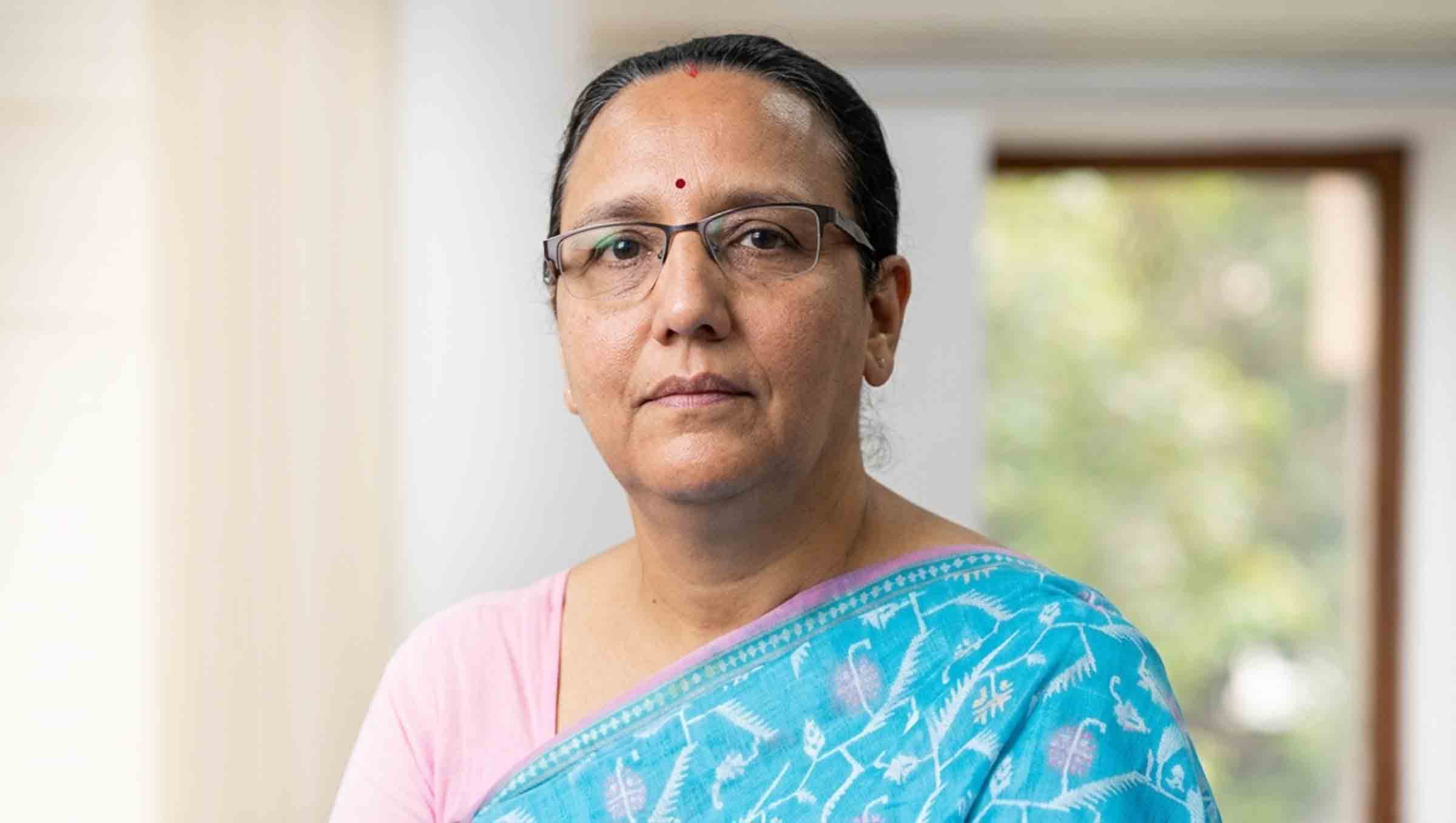
NIDHI CHHIBBER
Current Role: CEO, NITI Aayog
Batch: 1994, IAS (Chhattisgarh cadre)
Also Serves As:
• Director General, Development Monitoring and Evaluation Office (DMEO)
Key Milestones:
• Chairperson, CBSE (2022–2024)
• Secretary, Ministry of Food Processing Industries (2025)
• Former District Collector & Chief Electoral Officer (Chhattisgarh)
Focus Areas:
Real-time monitoring, outcome-based governance, and long-term strategy including Viksit Bharat 2047
Signature Approach:
Bridging grassroots realities with policy decisions through data-driven systems that prioritise speed and accuracy.
Seconds later, hundreds of kilometres away in New Delhi, that image flickers onto a dashboard inside NITI Aayog. What once took months of paperwork, follow-ups, and administrative drift now travels at the speed of sight.
This is not just a technological shift. It is a structural one. And at its centre is Nidhi Chhibber—the bureaucrat quietly redefining how India listens to its own margins.
The Invisible Lag
India’s governance has long struggled with a paradox: policies are often designed with urgency, but their implementation is slowed by invisible lags. In the Aspirational Districts and Blocks Programme, the problem was particularly acute.
Field realities—broken supply chains, delayed infrastructure, gaps in service delivery—were documented, but rarely in time to matter. By the time quarterly reports reached decision-makers, the crisis had either escalated or morphed into something else entirely.
Chhibber saw this not as a failure of intent, but of visibility.
“The last mile wasn’t just far—it was delayed,” notes a senior official familiar with the system. “And delay, in governance, is often the difference between response and regret.”
Data Without Distortion
Perhaps the portal’s most radical feature is what it removes.
For decades, administrative data has travelled through layers—each adding interpretation, sometimes dilution. By the time it reached the top, the rawness of reality was often lost.
The CPO Portal bypasses that.
It creates a direct line between field and file, reducing what insiders call the “middle-layer smoothing effect.” The result is data that is sharper, sometimes uncomfortable, but undeniably real.
And in governance, reality is power.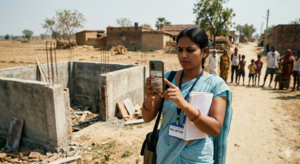
From Reaction to Prediction
Beyond immediacy, the system introduces something equally critical: pattern recognition.
When multiple blocks report similar issues—say, delays in fortified rice distribution or recurring health infrastructure gaps—the system flags it.
This allows administrators to act not just locally, but regionally. Resources can be reallocated, strategies adjusted, and bottlenecks addressed before they spiral.
It is governance shifting from firefighting to foresight.
The First Signals of Change
Even in its pilot phase, the portal has begun to reshape administrative reflexes.
In three aspirational blocks, disruptions in fortified rice supply chains were flagged early through field uploads. What would have taken weeks to surface was resolved in days.
For Chhibber, these are not just early wins—they are proof of concept.
“Technology doesn’t solve problems,” an official at the launch remarked. “It reveals them faster. What you do next—that’s governance.”
A Smartphone as a State Tool
What makes the CPO Portal significant is not its complexity, but its accessibility.
In a country where smartphones have penetrated even the most remote districts, the device becomes more than a communication tool—it becomes an instrument of statecraft.
With a single tap, a field officer can now:
• Document a failing system
• Escalate a local crisis
• Trigger administrative attention
The distance between a village grievance and a policy response is no longer measured in kilometres—or weeks—but in seconds.
Redefining “Aspirational”
For years, the term Aspirational Districts carried both promise and ambiguity. It signified potential, but also a gap—between where these regions were and where they needed to be. The CPO Portal begins to close that gap not through rhetoric, but through responsiveness.
By making every issue visible in real time, it transforms aspiration into accountability.
The Chhibber Method
Those who have worked with Nidhi Chhibber describe her approach as methodical, almost surgical. She does not chase disruption for its own sake; she identifies friction points and removes them.
In this case, the friction was time. By compressing the time between observation and action, she has altered the rhythm of governance itself.
A Race Against Time—Now With a Head Start
“Governance is often a race against time,” a senior official noted during the launch. “With the CPO Portal, we finally have a head start.”
That head start may prove decisive. Because in the end, governance is not just about policies written in conference rooms—it is about problems solved in real places, for real people, at the right time.
And sometimes, all it takes to bridge that distance is a photograph, a signal, and a system ready to listen.
Rewiring the System
Early this month, that delay was formally challenged with the launch of the Central Prabhari Officer (CPO) Portal—a deceptively simple tool with transformative implications.
The idea is elegant: turn every field officer into a real-time node in a nationwide information network.
Through a mobile-first interface, Prabhari Officers can now:
• Upload geotagged images
• Log on-ground observations instantly
• Flag urgent issues without bureaucratic filtration
What emerges is not a static report, but a living map of governance—constantly updating, constantly signalling.