


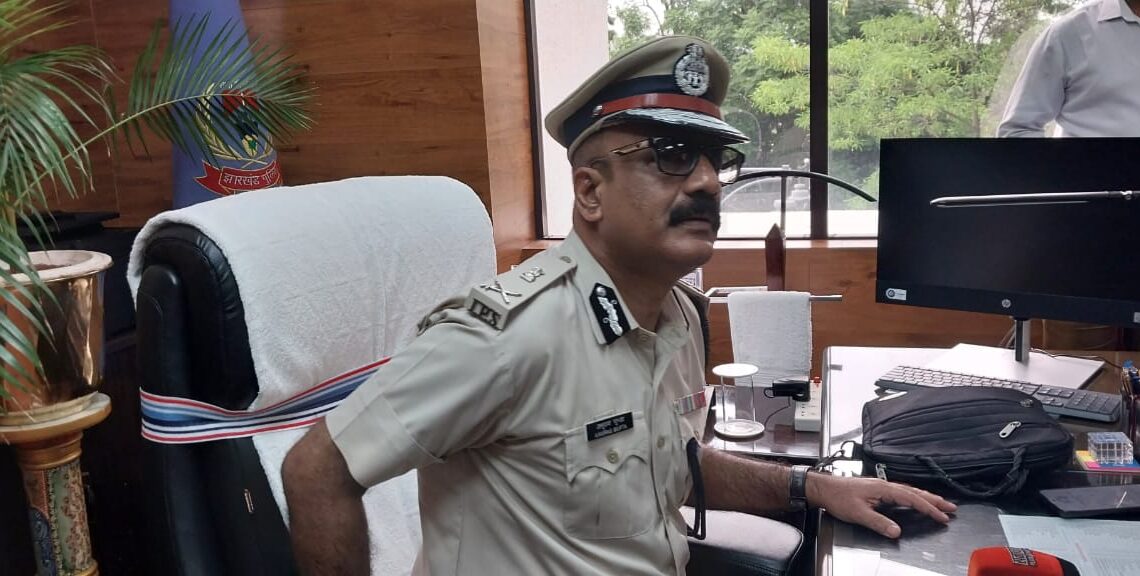
NEW DELHI: In a case with sweeping implications for federal governance in India, the Supreme Court will hear on July 15 a challenge stemming from the Jharkhand government’s decision to retain Anurag Gupta as the state’s Director General of Police (DGP) beyond his date of retirement — a move that the Union Ministry of Home Affairs (MHA) and the Election Commission of India (ECI) have strongly opposed.
Gupta, a 1990-batch IPS officer, officially retired on April 30, 2025, but continues to serve as the state’s police chief after the Hemant Soren-led government invoked the newly framed “Selection and Appointment Rules 2025” to extend his term for two additional years. The Centre has refused to recognize this extension, citing violation of All India Services (AIS) Rules, the Indian Police Service (Cadre) Rules, 1954, and the Supreme Court’s 2006 Prakash Singh judgment, which governs DGP appointments across the country.
The escalating legal standoff — which also saw the state’s Accountant General issue Gupta a “zero pay-slip” for May due to lack of Centre’s approval — has triggered a governance crisis and renewed debate over who truly controls the services of All India Cadre officers like those in the IPS, IAS, and IFoS.
Legal experts say the court’s ruling could reshape the administrative equilibrium between centre and state powers, especially in politically sensitive postings like the DGP, where neutrality and institutional integrity are paramount. The six-month residual service rule — a safeguard from the Prakash Singh guidelines to prevent post-retirement extensions — is at the heart of the argument. Gupta was regularized just three months before retirement, bypassing the rule requiring a minimum of six months’ service at the time of empanelment.
While the Jharkhand government maintains the extension serves “public interest” and ensures police leadership stability, critics argue it violates the spirit of police reform and reflects politically motivated cadre control. The MHA, for its part, has reiterated that the Centre is the final authority on cadre decisions, and no officer can continue post-retirement without its consent.
With both sides holding firm and multiple constitutional principles at stake — including federalism, rule of law, and police independence — the Supreme Court’s upcoming decision is being closely watched by legal scholars, bureaucrats, and state governments alike.