NEW DELHI — In a country where power cuts and petrol shortages once defined the “developing‑nation” image, India now faces a different kind of fuel crisis — one born less of scarcity than of transition, imbalance, and policy lag. The newly released Energy Statistics India 2026 report by the Ministry of Statistics and Programme Implementation paints a paradoxical picture: strong growth in total energy use, rising green capacity, and soaring credit to the energy sector — yet households, farmers, and mid‑sized industries still reel under price spikes, supply jitters, and an uneven energy ladder.
In FY 2024‑25, India’s total primary energy supply climbed to 9,32,816 Ktoe, a 2.95% increase over the previous year. At the same time, per‑capita energy consumption rose from 15,296 megajoules per person in FY 2015‑16 to 18,096 MJ in FY 2024‑25 — a steady but telling rise that underlines growing demand for air‑conditioning, transport, and digital infrastructure.
Yet even as the numbers swell, millions tell a different story at the pump and the meter.
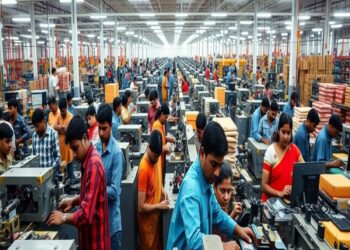
In Gurugram’s industrial belt, Pramod Singh shuts down half his garment unit every other day. “Power we have, but not enough fuel for our backup generators when the grid fails,” Singh says, wiping oil from his hands. “Diesel last year was bad, this year it’s worse. The bills are burning faster than our machines run.”
Singh is not alone. Across manufacturing clusters, small traders, and cold‑storage operators, the “fuel crisis” is not just about blackouts — it’s about the cost of running on diesel, petrol, and, increasingly, compressed gas when the grid stutters or the grid’s tariffs climb. The ministry’s data show total final energy consumption rising from 4,69,212 Ktoe in FY 2015‑16 to 6,08,578 Ktoe a decade later — a 30.4% jump that reflects a nation moving, building, cooling, and consuming more than ever.
But the price tag is heavy. Global oil volatility, rupee fluctuations, and taxation changes have turned fuel into a political flashpoint. State elections, municipal protests, and truckers’ strikes flare up around the pump, even as the government stresses that “India is not short of energy.” The real crisis, many economists say, lies in the structure of the energy mix and the pace of transition.
Coal remains the backbone. In FY 2024‑25, coal and lignite contributed 5,52,315 Ktoe to total energy supply, up from 3,87,761 Ktoe in FY 2015‑16. Crude oil, natural gas, and other fossil fuels have also grown steadily, locking the economy into a hydrocarbon‑heavy present while the world nudges India toward faster decarbonization.
Key Highlights | Energy Statistics India 2026
- Energy Supply Growth: India’s Total Primary Energy Supply (TPES) grew 2.95% year-on-year, reaching 932,816 KToE in FY 2024–25.
- Massive Renewable Potential: India’s renewable energy potential stands at 4,704 GW, led by solar (71%) at 3,343 GW, followed by wind (1,164 GW) and large hydro (133 GW).
- State Concentration: Over 70% of renewable potential is concentrated in six states — Rajasthan (23.7%), Maharashtra, Gujarat, Andhra Pradesh, Karnataka and Madhya Pradesh.
- Installed Renewable Capacity: Capacity surged from 90 GW (2016) to 229 GW (2025), reflecting a CAGR of 10.93%.
- Green Power Generation: Renewable electricity generation more than doubled from 189,314 GWh (2015–16) to 416,823 GWh (2024–25), with a CAGR of 9.17%.
- Rising Energy Use: Per capita energy consumption increased to 18,096 MJ/person, growing at 1.89% CAGR over the decade.
- Efficiency Gains: Transmission and distribution losses declined from ~22% to ~17%, indicating improved power sector efficiency.
- Coal Still Dominates: Coal remains the primary energy source, rising from 387,761 KToE to 552,315 KToE over the period.
- Consumption Surge: Total Final Consumption (TFC) grew over 30%, reaching 608,578 KToE in FY 2024–25.
- Credit Boom: Credit flow to the energy sector increased sixfold, from ₹1,688 crore (2021) to ₹10,325 crore (2025).
At the same time, renewables are surging — but not yet at the scale that eases everyday stress. The country’s technical renewable energy potential stands at 47,04,043 megawatts as of March 31, 2025, with solar alone accounting for 33,43,378 MW — about 71% of the total. Installed renewable capacity has climbed from 90,134 MW in FY 2016 to 2,29,346 MW in FY 2025, registering a compound annual growth rate of 10.93%.
The numbers look impressive, but the lived experience is uneven. In Rajasthan and Gujarat, solar farms shimmer under the sun, feeding power into the grid. In Karnataka and Madhya Pradesh, wind‑mill‑dotted hills turn steadily. Yet, in many villages and peri‑urban townships, electricity remains patchy, and the “green” label on the national grid does not translate into cheaper or more reliable power at home.
The report also highlights progress in energy efficiency. Transmission and distribution losses, which hovered around 22% in FY 2015‑16, have fallen to about 17% in FY 2024‑25 — a sign that more power generated is actually reaching consumers. Gross generation from renewables has doubled over the past decade, rising from 1,89,314 GWh in FY 2015‑16 to 4,16,823 GWh in FY 2024‑25, a CAGR of 9.17%.
Still, the benefits are often partial and technical. A farmer in western Uttar Pradesh praises the new solar‑pump scheme in principle, but complains that the initial subsidy covers only part of the installation, and the rest has to be financed through high‑interest rural loans. “Solar is good on paper,” he says, “but if the inverter fails or the grid is off, the diesel pump has to run — and that fuel never seems to get cheaper.”
Across cities, households face a similar tug‑of‑war: air‑conditioners cool, but the bill rises. Electric vehicles are sold as a “fuel‑free future,” yet the charging infrastructure lags behind the marketing. The center’s push for rooftop solar and smart grids coexists with a ground‑level reality of transformer overloads, voltage spikes, and emergency power cuts during peak summer.
The financial picture may be the most telling part of the story. The energy sector has seen a six‑fold jump in credit flow, from ₹1,688 crore in 2021 to ₹10,325 crore in 2025. Big solar parks, green‑hydrogen pilots, and modernized coal‑fired stations attract capital, but many small‑ and medium‑scale projects struggle to raise funds at reasonable rates. Banks and NBFCs shy away from perceived risk in transmission projects or rural‑electrification upgrades, even as the same data show rising demand and capacity.
“Money is chasing the headline projects,” says a power‑sector banker who spoke on condition of anonymity. “The crisis on the ground is not lack of big ideas, but lack of last‑mile finance and risk‑sharing.”
Industry and agriculture point the finger at another layer of the crisis: policy inconsistency. Fuel subsidies on diesel for farm use have been cut or rationalized, but alternative fuels like Compressed Natural Gas and electric machinery have not yet reached the farmer’s doorstep in an affordable, reliable way. In urban logistics, e‑rickshaws and e‑autos are pushed as solutions, yet the supply of subsidized batteries and charging stations cannot keep up with demand.
“Every time I see a new policy announcement, I wonder if it will actually reach my route,” says Manoj Kumar, a CNG‑auto driver in Delhi. “The fuel is cheaper than petrol, sure, but when the stations run out or the lines are too long, I just sit idle. The crisis is not that we have no fuel — it’s that we can’t trust it.”
The government’s narrative focuses on transformation. The renewable‑energy potential, the rising share of solar and wind, the shrinking grid losses, and the jump in green credit all feed that narrative. Officials point to India’s ability to increase renewable‑based generation by more than 200% over a decade while still growing the economy at a healthy clip. The energy statistics are cited as proof that India is on the “right track” — even if the track feels bumpy for those travelling on it.
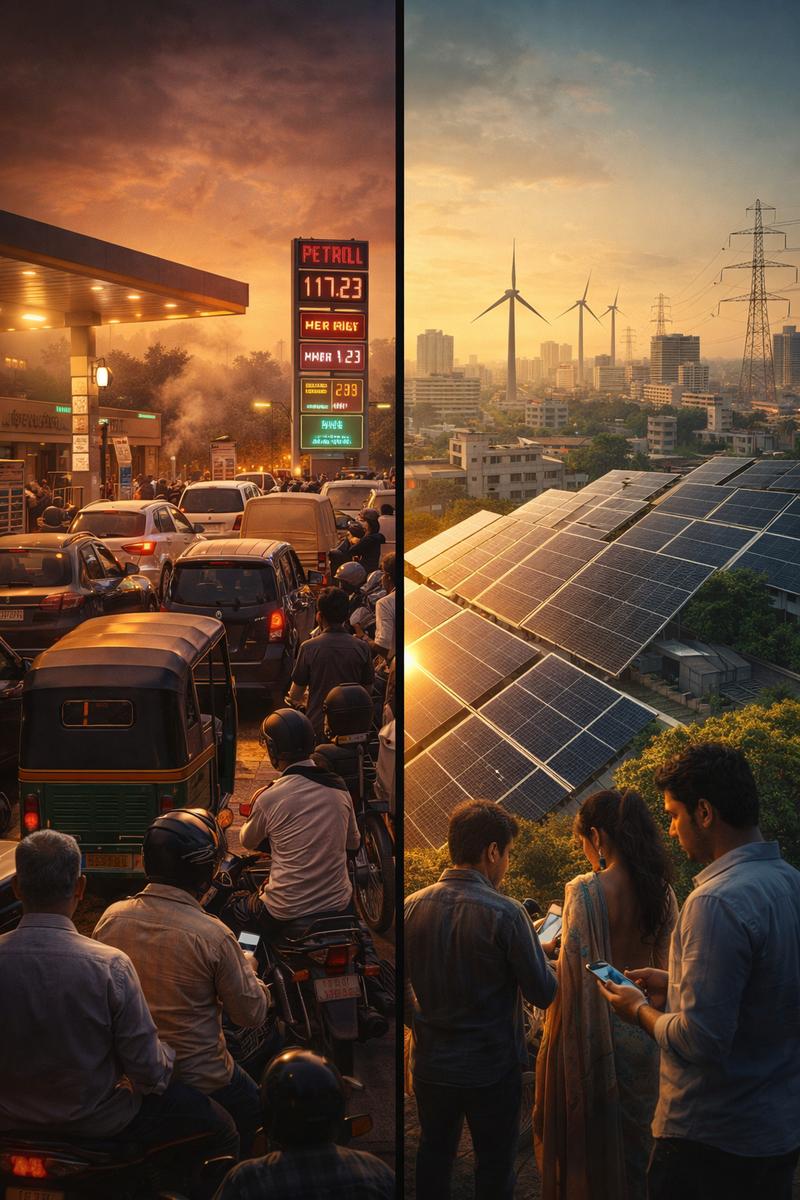
Yet, the raw data also reveal a nation straddling two eras. On one side, a coal‑based, oil‑fueled industrial base that still dominates; on the other, a renewable‑rich but unevenly integrated future. The “fuel crisis,” then, is less about a shortage of molecules and more about a mismatch of time, infrastructure, and affordability.
For millions of Indians, the crisis is heard in the hum of backup generators, seen in the long queues at fuel stations, and felt in the monthly bills that show both rising energy use and rising costs. The Energy Statistics India 2026 report may end as a PDF on a ministry website, but its real test will be how quickly its numbers stop being a technical record and start reflecting a world where fuel no longer feels like a constant emergency.