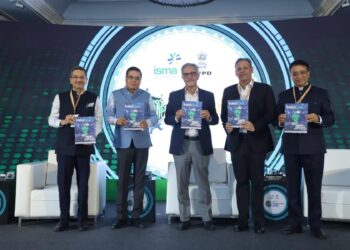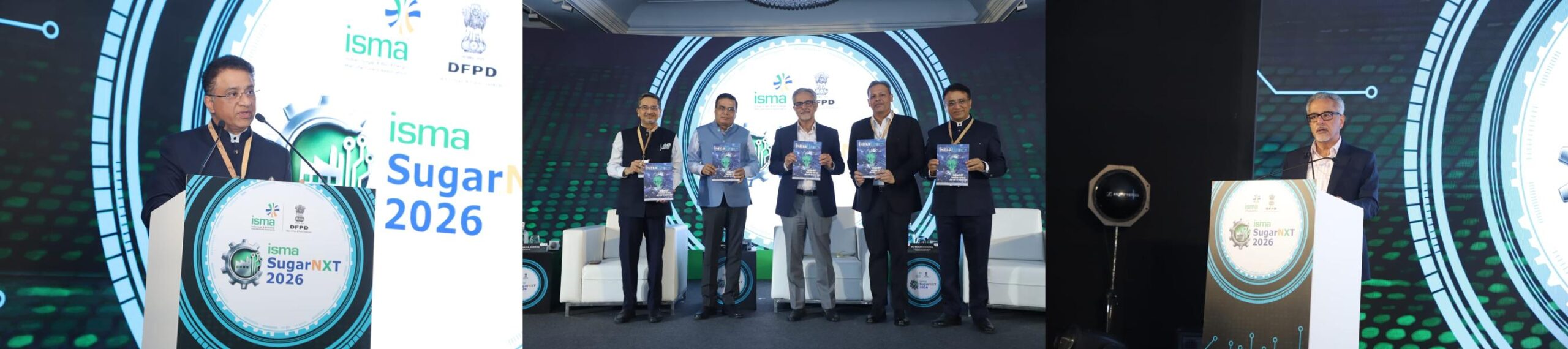
New Delhi: The Indian Sugar & Bio-Energy Manufacturers Association (ISMA) has concluded the inaugural SugarNXT 2026 conclave, bringing together industry leaders, policymakers and technology experts to highlight technology-led strategies for reducing production costs and enhancing byproduct value across India’s sugar sector. The two-day event underscored a clear shift toward process efficiency, energy optimisation and digital integration as key drivers of cost competitiveness, with discussions focusing on how innovation is reshaping the economics of sugar manufacturing.
Sanjeev Chopra, secretary, Department of Food and Public Distribution, said the industry has evolved into a key pillar of India’s bio-energy ecosystem, pointing to the success of the 20% ethanol blending programme that has resulted in crude oil savings of nearly ₹1.65 lakh crore. He stressed the need to further improve plant-level efficiency, leverage real-time data and accelerate process optimisation.
ISMA President Niraj Shirgaokar said the sector is transitioning from a cyclical commodity market to a more stable and diversified bio-energy ecosystem, with technology adoption and byproduct valorisation central to future growth. Director General Deepak Ballani added that the next phase will depend on how effectively mills optimise operations, reduce energy and water intensity, and adopt data-driven decision-making.
Experts at the conclave showcased advancements in automation, artificial intelligence and real-time process control that are enabling mills to lower energy consumption, improve sugar recovery, reduce operational losses and minimise downtime. Energy efficiency and circular manufacturing models, including zero liquid discharge systems, emerged as key focus areas, alongside efforts to maximise value from byproducts. The event also featured the SugarNXT Hackathon, where innovators were recognised for solutions addressing operational and sustainability challenges in the sugar and bio-energy value chain.