 By Krishan Gopal Sharma
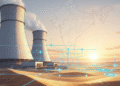
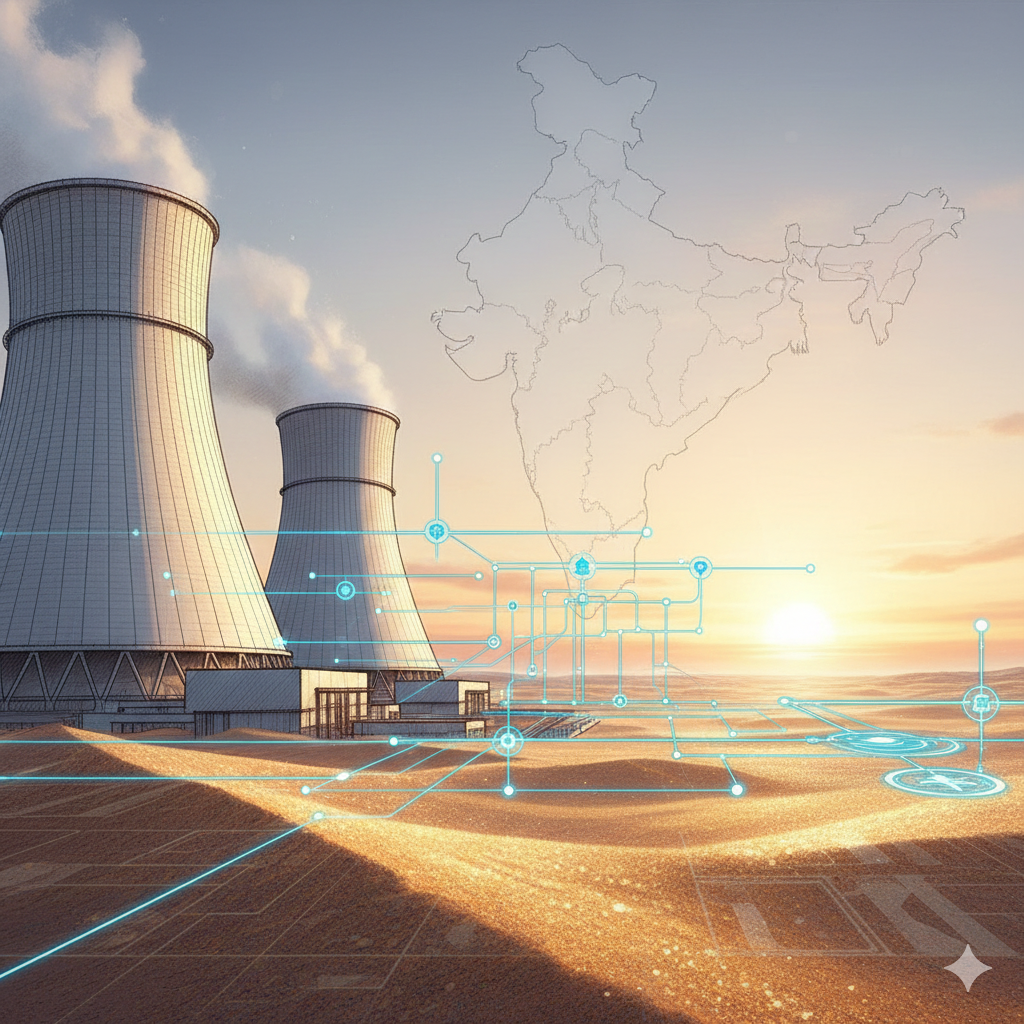
For decades, India’s nuclear energy sector remained a tightly controlled state monopoly, contributing barely 3% to the national electricity mix. Now, as climate pressures intensify, the government is betting big: a tenfold expansion to 100 GW by the nation’s centenary in 2047.
Central to this ambition is the Sustainable Harnessing and Advancement of Nuclear Energy for Transforming India (SHANTI) Bill, introduced in late 2025. The legislation signals a historic pivot from mid-20th-century bureaucracy to a framework inviting private innovation and capital.
Breaking the Monopoly
The high cost and long timelines of modern reactors — $10–15 billion per unit and more than a decade to build — have driven the reform push. By opening the sector to private players, New Delhi hopes to attract tech giants and industrial leaders seeking nuclear energy for carbon-neutral commitments. Critics, however, warn of risks, arguing that privatization could compromise supplier accountability and public safety.
The Thorium Vision
India’s “holy grail” remains thorium-based power, envisioned in Dr. Homi Bhabha’s three-stage programme. Thorium’s advantages are compelling:
- Safety: Produces far less long-lived radioactive waste than uranium.
- Security: Fuel cycle is resistant to weaponisation.
- Self-Reliance: Utilizes domestic monazite sands instead of imported uranium.
Yet experts caution that commercial-scale deployment is a marathon, unlikely to mature until the 2040s.
A “Safety Renaissance”
Past nuclear disasters cast long shadows over expansion plans in densely populated India. Advocates point to Generation III+ reactors and Small Modular Reactors (SMRs) with passive safety systems that can shut down without human intervention or external power. Lifecycle management and budgeted decommissioning are integral to the roadmap.
As India navigates this high-stakes balancing act, the key question endures: Can it achieve 100 GW of nuclear power while maintaining auditable safety standards for a net-zero world?