• About Us
  • Contact us
  • Privacy Policy
Advertisement
  • Home
  • Governance
  • Digital
  • Industry
  • Infrastructure
  • Economy
  • PSE
  • Health
  • Interviews
  • E Magazine
No Result
View All Result
  • Home
  • Governance
  • Digital
  • Industry
  • Infrastructure
  • Economy
  • PSE
  • Health
  • Interviews
  • E Magazine
No Result
View All Result
No Result
View All Result
Home Governance

Harish Rana Euthanasia Case: A 14-Year Legal Battle for a Dignified Goodbye

When Law Meets Humanity: The Story Beyond the Verdict

JP Gupta by JP Gupta
March 23, 2026
in Governance, Health, Interviews
Harish Rana Euthanasia Case: A 14-Year Legal Battle for a Dignified Goodbye
0
SHARES
15
VIEWS
Share on FacebookShare on Twitter

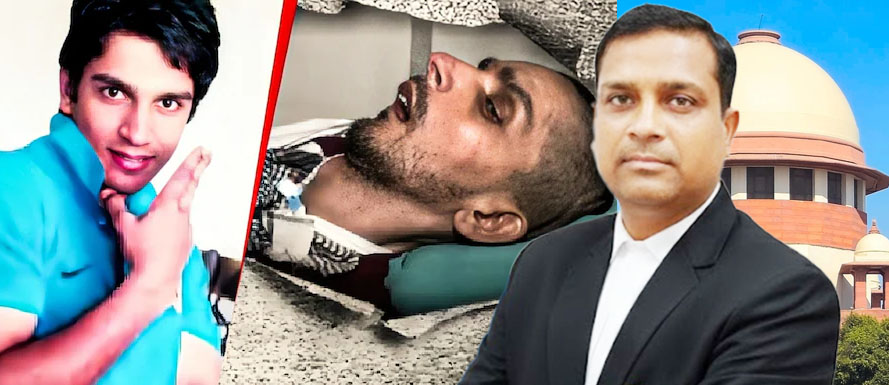
Advocate Manish Jain uncovers the emotional realities behind the Harish Rana case and the Supreme Court’s humane verdict.
By Ravindra Kr. Sharma


It was not just another day inside the courtroom. It was a moment where silence spoke louder than arguments, and emotions carried more weight than legal reasoning. The Harish Rana case stands today as one of the most moving examples of how law and humanity can intersect.

For over 14 years, Harish Rana remained in a vegetative state—neither fully alive in the conventional sense nor at peace. His existence depended on feeding tubes and continuous medical care. While his body survived, life as we understand it had long faded away.

Advocate Manish Jain, who fought the case, recalls how it all began. Introduced through a social connection, what initially seemed like a legal matter soon turned into a deeply personal mission. “It was not just a case file,” he shared, “it was a story of pain, endurance, and a family’s silent suffering.”

The first visit to Harish’s home left a lasting impact. Even trained legal interns found themselves overwhelmed, unable to document what they witnessed. The atmosphere was heavy with helplessness. Harish’s father, once a chef at a five-star hotel, had sold his home and shifted cities, dedicating his life entirely to caring for his son. His sacrifice reflected not only love, but an unwavering refusal to give up.

The legal journey, however, was far from easy. The Delhi High Court initially rejected the plea, stating that Harish was not on a ventilator or conventional life support. But Advocate Jain challenged this interpretation. He argued that feeding tubes (PEG tubes) and other medical interventions sustaining basic bodily functions should also be considered forms of life support.

The case then reached the Supreme Court, where it took a decisive turn. A panel of seven experts from AIIMS was constituted to evaluate Harish’s condition. Their conclusion was clear and heartbreaking—there was no possibility of recovery.

At that moment, the debate shifted. It was no longer about prolonging life, but about preserving dignity. Should a person be forced to exist indefinitely without awareness, without hope?

The Supreme Court’s decision to allow passive euthanasia marked a historic and compassionate step. According to Advocate Jain, the courtroom fell into an unusual silence when the verdict was delivered. Even the judges appeared visibly moved, reflecting the emotional gravity of the case.

Passive euthanasia does not actively end life; rather, it allows nature to take its course by withdrawing artificial support. In Harish’s case, this meant the gradual removal of medical tubes under strict supervision, ensuring minimal discomfort.

Currently under palliative care at AIIMS, Harish is being allowed a peaceful transition—away from prolonged suffering and toward a dignified end.

This case leaves behind profound questions. Is survival alone enough to define life? Or does true humanity lie in allowing a person to depart with dignity when hope no longer exists?

The Harish Rana case is not just a legal milestone—it is a reminder that compassion must always remain at the heart of justice.

Understanding Passive Euthanasia

  • Allows withdrawal of life-sustaining treatment
  • Focuses on dignity rather than prolonging suffering
  • Permitted under strict legal and medical guidelines in India
  • Requires expert medical evaluation and court approval
  • Emphasizes compassionate end-of-life care


Previous Post

Scindia lunches ‘Samriddhi Kendra’ in MP’s Guna to deliver Phygital healthcare, education and e-Gov services in villages

JP Gupta

JP Gupta

Leave a Reply Cancel reply

Your email address will not be published. Required fields are marked *

  • Trending
  • Comments
  • Latest
Unapproved ‘Advisor’ Raises Alarm in MSME Ministry

Unapproved ‘Advisor’ Raises Alarm in MSME Ministry

January 19, 2026
MapleCloud charts ₹100 crore growth path at PartnerSphere 2025

MapleCloud charts ₹100 crore growth path at PartnerSphere 2025

July 10, 2025
The Srinivas Doctrine: How Rajasthan’s Chief Secretary is rewriting the rules of governance

The Srinivas Doctrine: How Rajasthan’s Chief Secretary is rewriting the rules of governance

January 27, 2026
Deepening shadows over WAPCOS: CBI trap signals wider probe into alleged graft network

Deepening shadows over WAPCOS: CBI trap signals wider probe into alleged graft network

March 2, 2026
APSC needs financial autonomy to tone up working

APSC needs financial autonomy to tone up working

0
Corruption down revenue up

Corruption down revenue up

0
ICICI launches ‘Digital Village’ initiative

ICICI launches ‘Digital Village’ initiative

0
Time for a change

Time for a change

0
Harish Rana Euthanasia Case: A 14-Year Legal Battle for a Dignified Goodbye

Harish Rana Euthanasia Case: A 14-Year Legal Battle for a Dignified Goodbye

March 23, 2026
Scindia lunches ‘Samriddhi Kendra’ in MP’s Guna to deliver Phygital healthcare, education and e-Gov services in villages

Scindia lunches ‘Samriddhi Kendra’ in MP’s Guna to deliver Phygital healthcare, education and e-Gov services in villages

March 15, 2026
A Leader Rooted in Community

A Leader Rooted in Community

March 11, 2026
IMC 2026 slated for October 7–10 in New Delhi

IMC 2026 slated for October 7–10 in New Delhi

March 4, 2026

Recent News

Harish Rana Euthanasia Case: A 14-Year Legal Battle for a Dignified Goodbye

Harish Rana Euthanasia Case: A 14-Year Legal Battle for a Dignified Goodbye

March 23, 2026
Scindia lunches ‘Samriddhi Kendra’ in MP’s Guna to deliver Phygital healthcare, education and e-Gov services in villages

Scindia lunches ‘Samriddhi Kendra’ in MP’s Guna to deliver Phygital healthcare, education and e-Gov services in villages

March 15, 2026
A Leader Rooted in Community

A Leader Rooted in Community

March 11, 2026
IMC 2026 slated for October 7–10 in New Delhi

IMC 2026 slated for October 7–10 in New Delhi

March 4, 2026

deneme bonusu veren siteler

Smart Governance

Smart Governance is a community engagement platform bringing together decision-makers and bureaucrats from the Indian Government together through a strategic mix of platforms such as Print, Digital, Live Events, Virtual Events, Research, and Training platforms.

Follow Us

Browse by Category

  • Digital
  • Economy
  • Education
  • Governance
  • Health
  • India
  • Industry
  • Infrastructure
  • Innovation
  • Interviews
  • My View
  • News
  • PSE
  • Uncategorized

Recent News

Harish Rana Euthanasia Case: A 14-Year Legal Battle for a Dignified Goodbye

Harish Rana Euthanasia Case: A 14-Year Legal Battle for a Dignified Goodbye

March 23, 2026
Scindia lunches ‘Samriddhi Kendra’ in MP’s Guna to deliver Phygital healthcare, education and e-Gov services in villages

Scindia lunches ‘Samriddhi Kendra’ in MP’s Guna to deliver Phygital healthcare, education and e-Gov services in villages

March 15, 2026
  • About Us
  • Contact us
  • Privacy Policy

© 2025 Smart Governace

No Result
View All Result
  • Home
  • Governance
  • Digital
  • Industry
  • Infrastructure
  • Economy
  • PSE
  • Health
  • Interviews
  • E Magazine

© 2025 Smart Governace