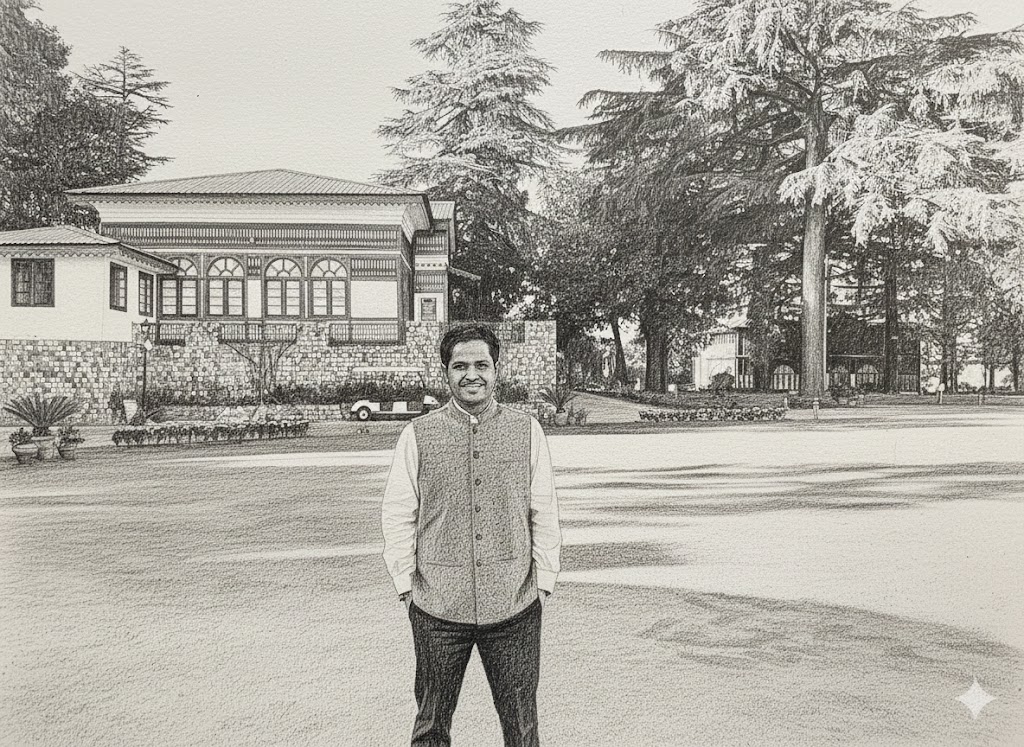
By JP Gupta
New Delhi: On a winter morning in Chitrakoot, there were no flashing cameras, no speeches, no official convoy halting traffic. Just a father holding his three-year-old daughter’s hand as they stepped into a modest government Anganwadi centre.
The father was Pulkit Garg, IAS, the District Magistrate of Chitrakoot. The child was his daughter, Siya.
And the choice he made that day would resonate far beyond the classroom.
In a country where ambition often means escaping government schools for private ones, Garg did the opposite. He enrolled his daughter in a government-run Anganwadi—the same early childhood centre meant for children of daily-wage earners, migrant workers and the poorest families.
It was a quiet act. But it carried a loud message.
A Classroom, Not a Statement—Until It Became One
For Garg, the decision was deeply personal. For the public, it quickly became symbolic.
Anganwadi centres, run under the Integrated Child Development Services (ICDS) scheme, are routinely discussed in policy files and review meetings—but rarely chosen by senior officials for their own children. Garg’s decision challenged this unspoken hierarchy.
“If we expect citizens to trust government institutions,” he later observed, “we must trust them ourselves.”
Inside the Anganwadi, there were no air-conditioners or glossy play zones. There were floor mats, colourful charts, hot meals, songs and laughter. There were children from families that seldom make headlines—and now, among them, the district magistrate’s daughter learned her first letters.
Why This Moment Matters
With one gesture, Garg unsettled a deeply embedded belief: that government schools are a last resort, not a first choice.
Parents across Chitrakoot noticed. Photos and short videos of Siya sitting alongside other children spread quickly across social media. The conversation that followed was telling. It wasn’t about privilege—it was about possibility.
If an IAS officer trusts a government Anganwadi with his own child, what does that say about the system many dismiss without a second thought?
Local educators say the impact has been tangible. Enrolment inquiries increased. Parents began visiting Anganwadis, asking questions, inspecting facilities. The tone of discussion shifted—from complaint to curiosity, from skepticism to scrutiny.
Leadership Beyond Files and Orders
Pulkit Garg’s decision didn’t require a government order. It didn’t need a new budget line. It required conviction. By placing his daughter where policy meets reality, he narrowed the distance between administrator and citizen. He didn’t merely evaluate the system—he participated in it. In an era of performative governance and headline-driven reforms, this was leadership without performance. No announcements. No grandstanding. Just belief translated into action.
A Small Room, A Big Signal
As Siya learns to count, sing and play inside that Anganwadi, something else is being taught—quietly but powerfully. That public institutions deserve trust. That reform begins with belief. That the strongest endorsement of governance is participation, not proclamation. Change does not always arrive through sweeping reforms or press conferences. Sometimes, it walks into a classroom holding a child’s hand. And in that simple act, an entire system is reminded of what it can be.