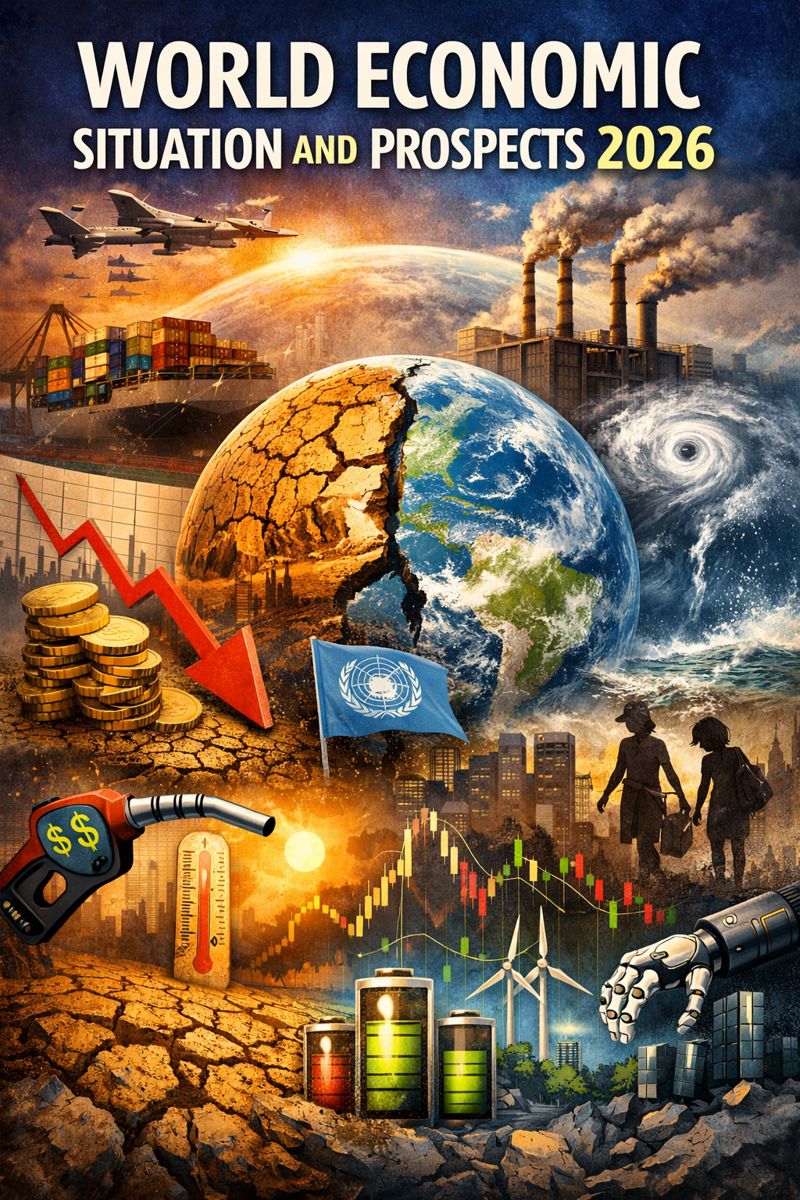
New Delhi: The global economy is expected to grow more slowly in 2026 as geopolitical tensions, trade uncertainty, high debt levels and climate-related shocks continue to strain recovery efforts, according to a new United Nations report released.
The World Economic Situation and Prospects 2026, prepared by the UN Department of Economic and Social Affairs along with UNCTAD and regional commissions, projects global economic growth at about 2.7 percent in 2026, below pre-pandemic averages and only a modest improvement over recent years. While inflation has eased in many countries, high prices continue to erode household purchasing power, particularly in developing economies.
The report finds that advanced economies such as the United States, Europe and Japan are expected to record steady but moderate growth, supported by easing monetary policy and resilient consumer spending. The U.S. economy is forecast to expand around 2 percent in 2026, while growth in the European Union is expected to remain subdued due to weak exports, structural constraints and geopolitical uncertainty.
Large developing economies, including China and India, are projected to remain key drivers of global growth. China’s economy is expected to grow around 4.6 percent in 2026 as domestic demand and targeted policy support offset external pressures. India is forecast to grow above 6 percent, buoyed by strong consumption and public investment, though higher global trade barriers pose risks.
Despite these pockets of resilience, the outlook for many low-income and vulnerable countries remains fragile. Elevated debt burdens, limited fiscal space and declining official development assistance are constraining investment in health, education and infrastructure, the report says. Growth in the world’s least developed countries is projected to remain well below the Sustainable Development Goal target of 7 percent.
Climate change continues to be a major threat to economic stability. The report notes that extreme weather events are becoming more frequent and severe, disrupting agriculture, pushing up food prices and increasing fiscal pressures related to disaster response. Global carbon emissions reached record levels in 2025, highlighting the persistence of carbon-intensive growth patterns.
Trade growth proved relatively resilient in 2025, supported by strong services trade and front-loaded shipments ahead of tariff hikes. However, the UN warns that global trade expansion is likely to slow in 2026 as protectionist measures take hold and policy uncertainty weighs on investment decisions.
Rapid advances in artificial intelligence and clean energy technologies offer opportunities for productivity gains and new investment, but the benefits remain highly concentrated in a small number of economies. Without stronger international cooperation, the report cautions, technological gaps between countries could widen further.
UN Secretary-General António Guterres called for renewed global solidarity, urging governments to translate recent commitments on development finance, climate action and debt relief into concrete results. “The world economy has shown resilience,” the report says, “but without coordinated action, growth will remain too slow to deliver shared prosperity and meet global development goals.”