

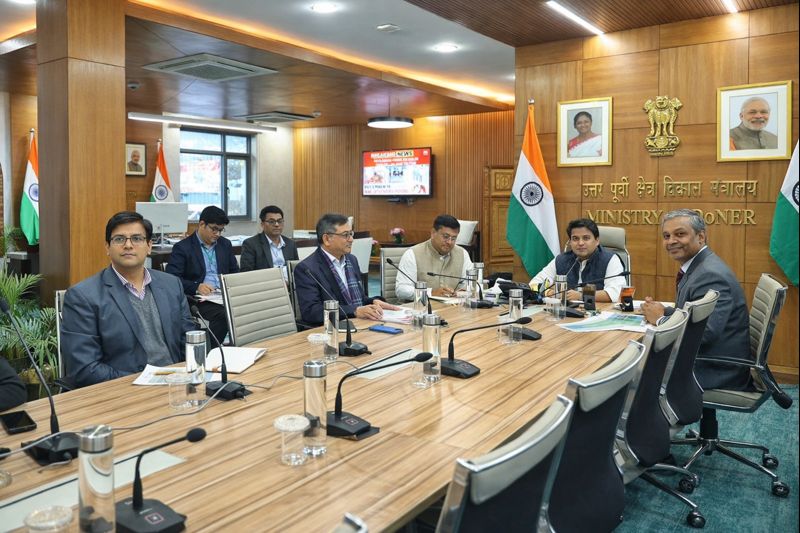
New Delhi: In a quiet conference room far from the looms and workshops of the North East, a significant shift in India’s approach to handloom and handicrafts took shape this week. Union Minister for Communications and Development of North Eastern Region, Jyotiraditya M. Scindia, joined chief ministers, state ministers, and senior officials for a high-level task force meeting that could redefine how traditional crafts translate into modern livelihoods.
Convened by Nagaland Chief Minister Neiphiu Rio, the meeting brought together policymakers from across the region — Assam, Mizoram, Manipur — alongside officials from the Ministry of Textiles and the Ministry of Development of North Eastern Region (MDoNER). The shared goal was clear: move beyond fragmented interventions and adopt a cluster-based development model that places artisans, markets and sustainability at the heart of policy.
From Isolated Craft to Integrated Value Chains
For decades, India’s handloom and handicrafts sector has struggled with a familiar paradox — extraordinary skill and cultural wealth, but inconsistent incomes and weak market access. The task force discussion sought to address this gap by strengthening the entire value chain, rather than focusing only on production.
The proposed cluster-based approach emphasises skill upgradation through master craftsman training, quality testing and certification, and the promotion of natural fibres and eco-friendly dyes. Crucially, it also integrates e-commerce platforms and export channels, ensuring that products are designed not just to be made, but to be sold.
“The value chain must be built with market demand in mind,” participants noted, underlining a key shift in thinking. Production, they argued, should follow demand — not the other way around.
Start Small, Demonstrate Success
Scindia urged a pragmatic approach: begin with one handloom product and one handicraft product, structure them end-to-end, and demonstrate success before scaling up. Identification of artisans within clusters, he said, must be the starting point — ensuring that policy interventions are grounded in real communities rather than abstract schemes.
Equally important was product differentiation at the final stage, where design, branding and buyer integration can transform traditional crafts into premium offerings.
Handholding at the Ground Level
One of the most practical proposals discussed was deploying dedicated handloom and handicraft resource persons at the cluster level, supported by on-ground buyer representatives. This dual presence — producer and market — is intended to ensure that quality, timelines and design expectations remain aligned.
Stakeholder convergence was another recurring theme, with ministries, state governments, private players and buyers all expected to play defined roles in moving clusters from the present reality to a more sustainable future.
Artisans at the Centre
At the heart of the discussion was a simple but powerful question: What impact will these interventions have on the weaver’s income?
Highlighting the long-term vision, Scindia said the success of the initiative must be measured not in meetings or reports, but in tangible gains for artisans over the next two to three years.
“Handloom and handicrafts are art forms and India’s wealth,” he said. “Handmade products are witnessing unprecedented value, comparable to precious stones. India must not only preserve this heritage but make it truly remunerative for its artisans.”
A Turning Point for the North East
If implemented effectively, the cluster-based model could mark a turning point for the North East — a region rich in craftsmanship but often disconnected from national and global markets. By aligning skills, sustainability and demand, policymakers hope to convert cultural heritage into stable, dignified livelihoods.
For the weavers and craftspeople working far from policy tables, the real test will be whether this blueprint translates into steady orders, fair prices and a future where tradition and prosperity are woven together seamlessly.