


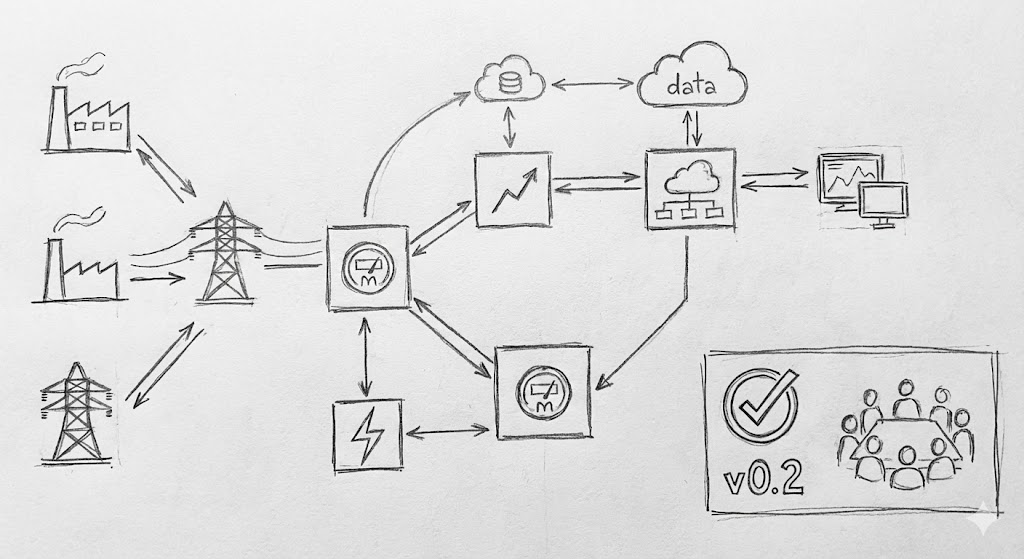
New Delhi: The second meeting of the India Energy Stack (IES) Taskforce was held Thursday to review Version 0.2 of the Strategy and Architecture documents designed to position IES as India’s Digital Public Infrastructure (DPI) for the power sector.
Task force members and representatives from the Ministry of Power, regulators, industry, and academia examined the updates that strengthen execution, with an emphasis on modularity, interoperability, and standards-led design. The revised strategy proposes developing IES through complete “use case packages,” introduces a structured framework to prioritise early use cases, maps relevant national digital platforms, and reinforces data governance, including the rationale for a National Power Sector Data Policy.
The Version 0.2 Architecture document sharpens focus on the trust and security fabric of IES, including digital identity, verifiable credentials, secure APIs, auditability and policy-as-code for consistent rule enforcement. These elements are supported by sandboxes, reference implementations and defined conformance pathways. As part of an accelerator programme, pilot distribution companies have been asked to implement inter-state peer-to-peer power trading using the prescribed APIs and specifications.
The meeting was chaired by Dr. Ram Sewak Sharma, former Director General of UIDAI, and attended by senior officials and sector leaders, including REC Limited Chairman and Managing Director Jitendra Srivastava, who described IES as a transformational step toward a unified and future-ready digital foundation for India’s power sector. The India Energy Stack project is scheduled for completion by July 2026.